Social Stories ™
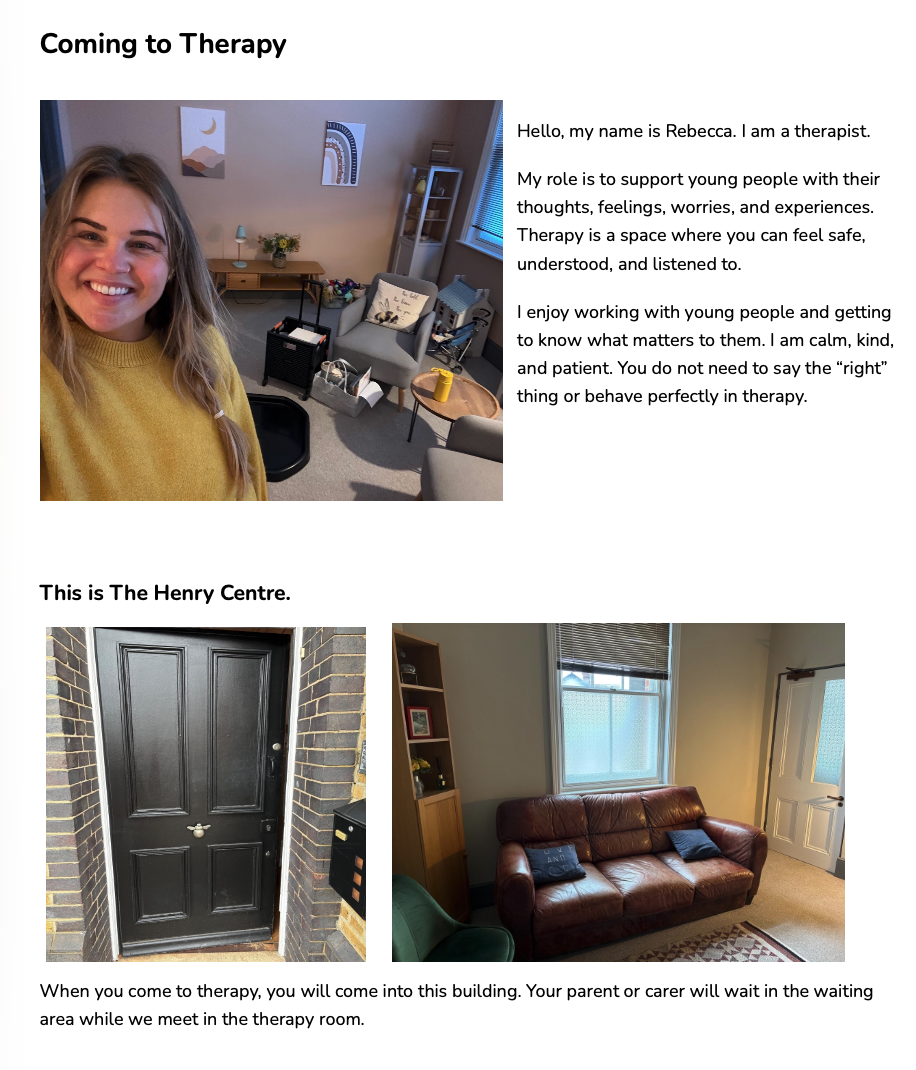
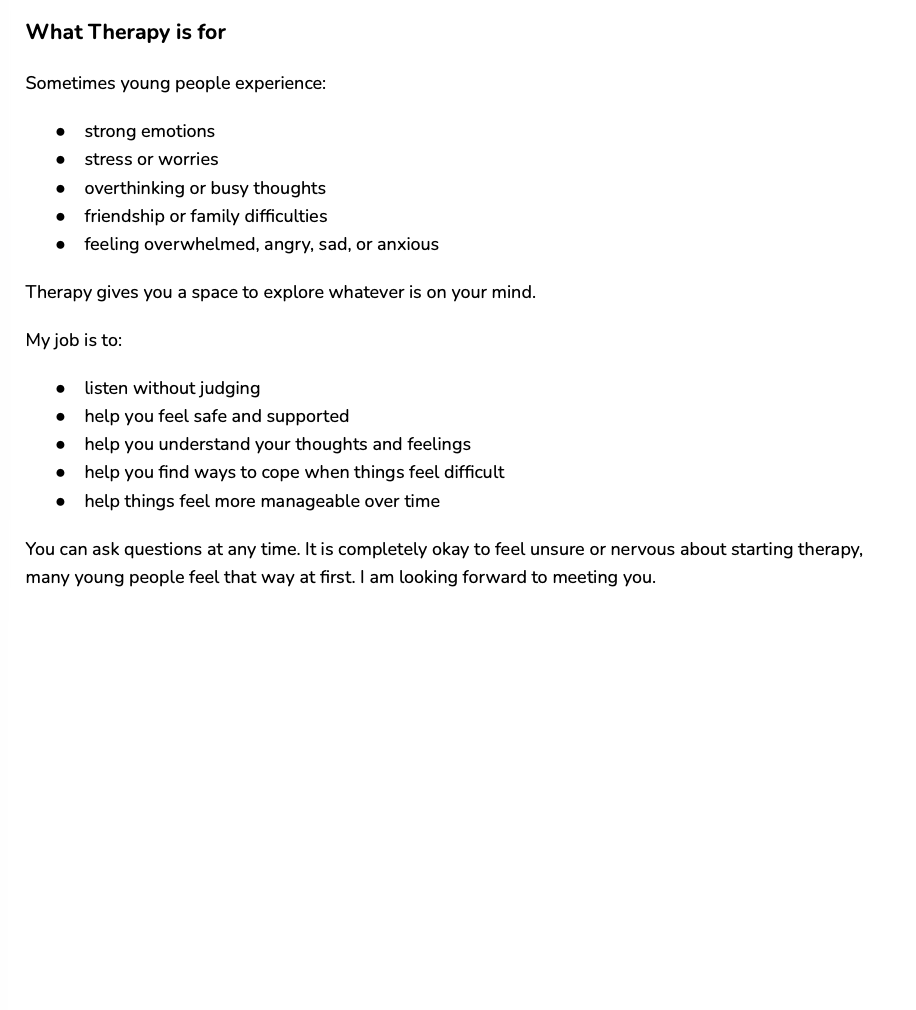
Social Stories ™ are a helpful way of providing clear, accessible information about experiences and situations that may otherwise feel uncertain or overwhelming. I use them to welcome young people to therapy and to support autistic children in understanding and navigating situations that are important to them. Each story is tailored to the child's needs, helping them feel informed, prepared, and more confident in their environment.Take a look at the example below. Social Stories are individually tailored to your child's interests and developmental level, ensuring they are relevant, engaging and easy to understand.

Parent Guide: Using Social Stories
Social Stories are most effective when they are introduced in a calm, positive, and supportive way. The aim is to help your child understand a situation, rather than to change their behaviour or persuade them to do something.
Tips for using Social Stories:
Read the story when your child is calm and receptive, rather than during a difficult moment.
Read it regularly, especially before the situation it relates to. Repetition helps children become familiar with the information.
Go at your child's pace. Some children enjoy reading the story independently, while others prefer to read it together with an adult.
Encourage discussion. Pause to answer questions or talk about parts of the story that are particularly relevant to your child.
Keep the experience positive and pressure-free. There is no need to test your child or check whether they have remembered everything.
Use the story as a reference point. You may revisit it before, during, or after the situation to reinforce understanding and provide reassurance.
Adapt as needed. As your child's understanding, interests, or circumstances change, the story can be updated to remain relevant and meaningful.
Remember: Social Stories are designed to provide information, increase predictability, and reduce uncertainty. Every child is different, so it may take time to discover how and when your child benefits most from them. The goal is to help your child feel informed, understood, and supported.